Midlife Sex Tips for Men Over 40: How to Improve Stamina, Desire, and More

Experiencing changes in your sex life over the age of 40 is common. If you’re noticing shifts in desire, erections, orgasm, confidence, or the way your body responds to touch, the first thing you need to know is you are not broken, and you are definitely not alone.
Contrary to popular belief, getting older doesn’t mean the end of great sex. Instead, it can be the beginning of a more intentional, connected, and pleasurable sex life. In fact, research consistently shows that many men remain sexually active well into later life, although what sex looks like often changes.
In my work with men as a sexologist, I’ve noticed that sex is thought about in a very narrow way: get hard quickly, stay hard, penetrate, orgasm, done. This performance-oriented sexual script is not conducive to exploratory sexual experiences. And so, widening your definition of sex, learning how to work with your body, and focusing on pleasure can help you have great sex over 40.
What Changes in Men’s Sexual Health During Midlife?
Male sexuality changes in a variety of ways during midlife. Age obviously plays a role, but so does stress, sleep, cardiovascular health, relationship dynamics, medication use, anxiety, weight loss/gain, and alcohol consumption. Reviews on sexual function in aging men consistently note that changes in erection quality, ejaculation, desire, and recovery time are often shaped as much by health and context as by age itself.
For example, you may notice you need more direct sexual stimulation than you used to. Getting an erection might take longer, and the refractory period may get longer. Orgasms may feel different, while desire may become less spontaneous and more responsive. None of that automatically means something is wrong. Rather, you may need a different approach to sex than you did when you were younger.
When does men’s sex drive decline?
A concern I hear a lot from men is that their sex drive will decline as they get older because of their lower testosterone. Testosterone does typically decline gradually with age, but sexual desire is influenced by far more than just one hormone. Sleep deprivation, stress, resentment in a relationship, body image concerns, anxiety, low mood, and chronic illness can all impact your libido.
The solution to increasing desire in midlife isn’t solely about increasing testosterone. Get curious and consider what conditions help desire emerge in your body now that you’re a little older. It might be less automatic and more context-dependent. That is great information to work with.
Is there a male menopause?
There certainly are age-related hormonal and sexual changes that affect men in meaningful ways. Depending on symptoms and testing, this could be referred to as age-related testosterone decline, late-onset hypogonadism, or androgen deficiency in aging men. The term ‘male menopause’ is a misnomer.
What is andropause?
The term ‘andropause’ is sometimes used to describe symptoms associated with declining testosterone and aging, but it is also inaccurate. Some men will experience low desire, reduced morning erections, fatigue, mood changes, or reduced vitality, but these symptoms can also overlap with stress, depression, sleep apnea, metabolic issues, and relationship distress.
Ways Men Can Improve Stamina and Orgasm in Midlife
If your goal is to increase your sexual stamina, improve your orgasm, or have more confidence in the bedroom, the solution is usually to slow down, feel more, and practice.
Breathing and pacing techniques
Tensing up, rushing, shallow breathing, clenching your jaw, tightening your glutes, and focusing too much on trying to get an erection or have an orgasm all contribute to ejaculating quickly. This is especially relevant for men dealing with performance anxiety, which is strongly linked to erectile difficulties and sexual distress.
Try this: slow your exhale, soften your belly, and reduce how fast you’re stimulating your genitals (either solo or partnered) by 50%. Build arousal in waves rather than in a straight line. Midlife sex is often better when it is less about urgency and more about pacing. This can help you last longer, stay present, and notice more pleasure along the way. It also shifts attention away from “Am I hard enough?” and toward “What actually feels good right now?”
Building stamina through edging
Edging can be a useful tool if you want to improve orgasm control and increase stamina. The basic idea is simple: you bring yourself close to climax, then back off, let the arousal settle, and build again. Over time, this can help you become more familiar with your arousal patterns and less likely to get swept away by them. It can also make your orgasm feel more intense because you are building a greater awareness of sensations.
Even though it is a skill you’re learning, the key is to be curious and playful. Treat it as an opportunity to learn more about your body. If you accidentally ejaculate, enjoy it!
Using lubrication to increase sensitivity
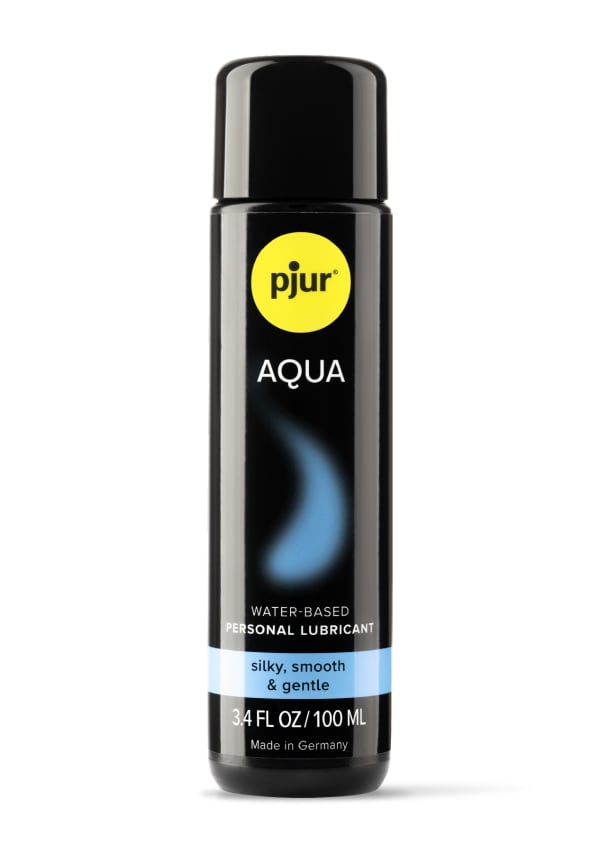
Using lube can make stimulation feel smoother and more pleasurable. If you require a lot of friction to maintain an erection, the added sensation from lube can help you loosen your grip on your penis when masturbating and make sex for your partner more comfortable. That matters even more in midlife, when skin sensitivity, erection reliability, and partner comfort may all shift. Ultimately, lubrication can make sex feel easier and less pressured.
If you want your lube to last longer, a silicone-based option like pjur ORIGINAL is a great choice because it stays slick for longer and requires less reapplication.
Exploring prostate stimulation
If you are curious about prostate play, midlife can actually be a great time to explore it. The prostate can be a source of intense pleasure for some men, but prostate play is not mandatory, superior, or somehow more evolved. It is just one more erotic option. If you try it, go slowly, use plenty of lube, and communicate clearly with a partner if they’re involved. Let it be exploratory. Pleasure expands when shame contracts.
Pelvic floor exercises for stronger erections and orgasms
Pelvic floor exercises can help men with erectile dysfunction and premature ejaculation, as well as improve orgasm quality. In practical terms, that means learning how to contract and relax the muscles you would use to stop the flow of urine when going to the toilet. Then, training strength, timing, and coordination. The “relax” part matters too. A hypertonic pelvic floor is not the goal.

How to Increase Desire in Midlife
How stress and lifestyle affect desire
In addition to managing your sleep, alcohol consumption, and stress, aerobic exercise has been shown to improve erectile function, and general physical health is closely tied to sexual function in midlife and older age.
Being chronically exhausted, inflamed, or numb is not conducive to feeling desire. Sometimes the sexiest intervention is not a trick or a new move in the bedroom. It is getting your blood sugar steadier, sleeping more, drinking less, walking more, and getting some support for your stress.
Communicating with your partner
Unfortunately, a lot of couples who’ve been together for a long time haven’t ever spoken openly with each other about sex and pleasure, which can lead to assumptions about the other partner. Better sex in midlife often begins with more pleasure-positive conversations.
Talk about what has changed, what still feels good, what you miss, and what you are open to trying. Not in the middle of a sexual moment. Not as an accusation. Just as two people trying to stay on the same team.
Novelty and exploration in long-term relationships
Long-term relationships do not automatically kill desire, but routine can lead to disinterest. Imagine eating the same meal every time you were hungry for the rest of your life. It might be a great meal, but it would likely become unappealing. Reviews on desire in long-term relationships suggest that novelty and variety can support desire over time.
That doesn’t mean you need to become a different person in bed or find that novelty with other people. It might mean changing the time of day you have sex, taking penetration off the pedestal, trying mutual masturbation, adding fantasy, experimenting with touch, or bringing in an orgasm enhancer or a new kind of lube.
Reframe sexuality beyond penetration
One of the most helpful sex tips for men in general is to stop treating penetration as the only thing that counts. Imagine you’re hungry and you choose a meal from a menu to eat. As I said above, it may be a tasty meal, but if it is the only thing on the menu, you may get bored with it, or there may be times when you’re not in the mood for that dish. The same is true for penetration when you’re horny. Penetration can be wonderful, but if it is the only thing on the menu, it can create some problems.
Hands, mouths, toys, prostate play, massage, sensual touch, kissing, shared fantasy, mutual masturbation, erotic conversation, and outercourse can all be added to your erotic menu. In fact, a broader repertoire of intimacy is associated with greater relationship satisfaction in older adults. This is one reason sex can become richer in midlife when you stop focusing solely on penetration.
Speak to a medical professional
Pleasure-positive advice should never mean ignoring red flags. If you have persistent erectile challenges, marked loss of desire, pain, pelvic symptoms, significant fatigue, low mood, or concerns about testosterone, speak to a medical professional. Erectile dysfunction can sometimes be an early indicator of cardiovascular or metabolic issues, and proper assessment matters.
Medication can be useful for some men, but it is not the only option. Natural tips for erectile dysfunction can include exercise, pelvic floor work, reducing anxiety, improving sleep, cutting back on alcohol, and expanding the way you define sex. The most effective plan is often biopsychosocial, not just pharmaceutical.
Benefits of Healthy Sex in Midlife
Healthy sex in midlife is associated with greater intimacy, stress reduction, increased relationship satisfaction, and overall improvements in quality of life. When couples stay erotically connected throughout life, they often report a greater sense of closeness and emotional support.
So no, midlife is not the end of desire, or erectile confidence, or orgasm, or erotic adventure. It can be the start of more curiosity, openness, and exploration. The men who tend to have the best sex in midlife are not necessarily the men with the hardest erections or the highest testosterone. They are often the men who become more attentive, more skillful, more communicative, more playful, and less ashamed. They learn to authentically embrace pleasure rather than chase performance.
About the author:

Photo credits: shutterstock_1575538924; shutterstock_440874997